News
Meet the people who make the lamps
On the last Friday of May we left the machines running, pushed the long table into the middle of the floor and opened the workshop doors. Forty people came: clients waiting on an order, two classes of design students, the couple who run the noodle shop at the corner. We had spent years talking about lamps. This afternoon was about hands.
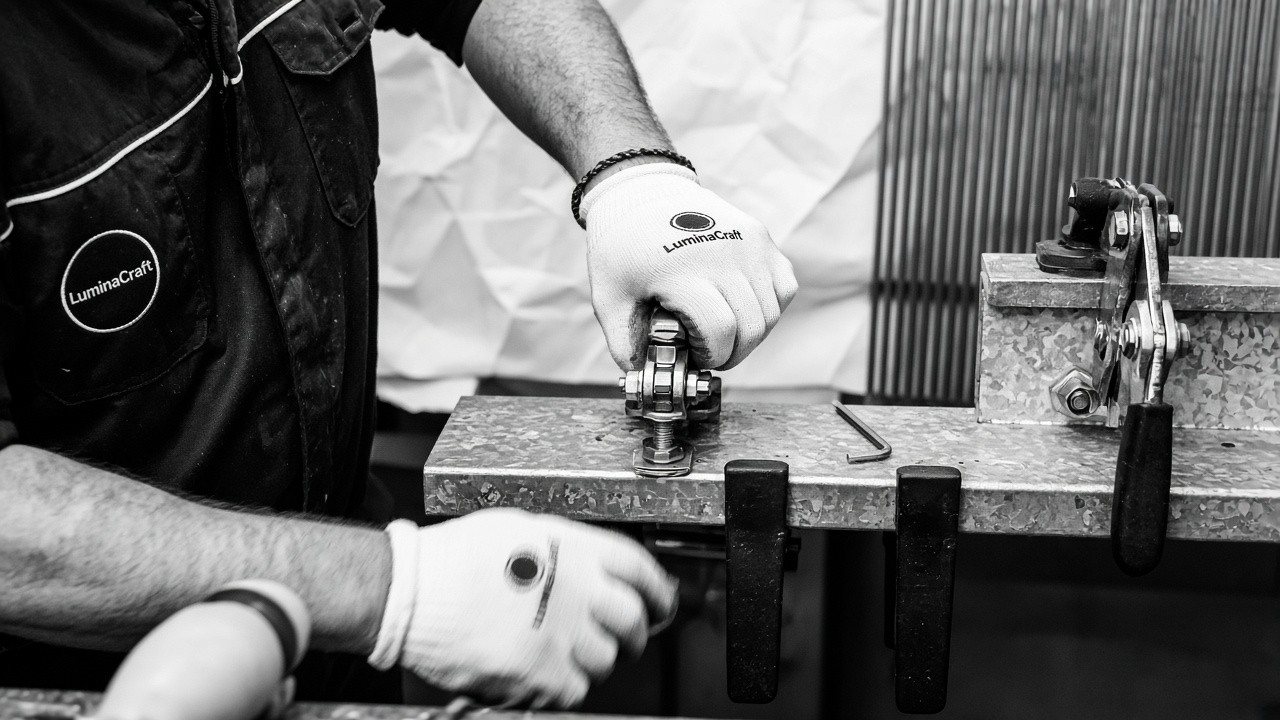
Four benches, four ways of holding light
We asked each maker to stay at their own bench and go on working while the room moved through. Nobody performed. The beating bench rang out first, a small hammer walking around a brass ring until the metal remembered its shape. Two metres away the paint bench was almost silent: a brush, a turn of the wrist, another coat, and a shade that will never quite match the one beside it. At the glass bench a sphere was reheated, breathed and rolled, kept round by patience rather than by force. And at the last bench the finished lamps were switched on one by one, held against a white wall, adjusted, switched off again.
- At the anvil — the woman who beats every ring by ear and knows a finished curve by the sound it stops making.
- At the paint bench — the man who has layered shades since our first years and reads a surface from arm's length before he reads it close up.
- At the glass bench — the pair who keep the sphere round by turning it, never by pushing it.
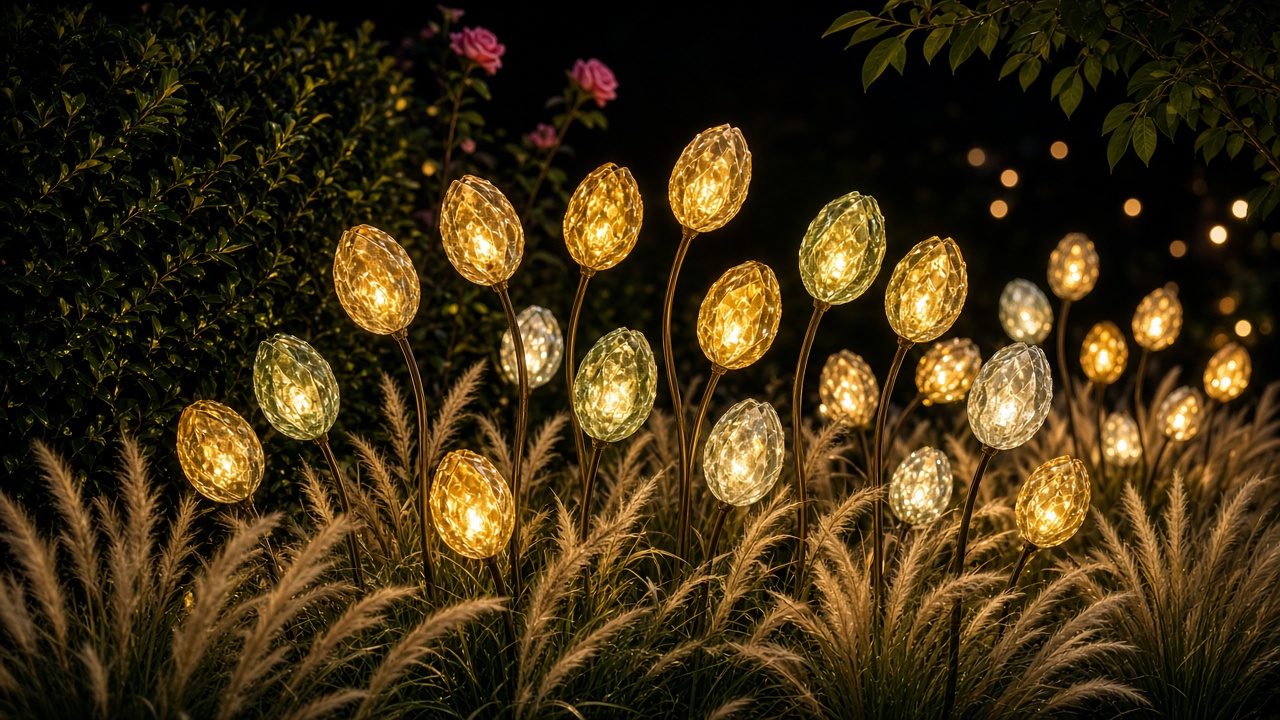
- At the last bench — the one who switches every lamp on against a plain wall, because a drawing is a promise and a wall tells the truth.
What the room asked
The questions came quickly once people understood that nothing was staged. How long does one shade take? Are the hammer marks left on purpose? What becomes of a lamp that fails the wall? One student asked whether we ever tire of the same four gestures, and the answer from the bench was short: the gestures stay, the light never does.
By six o'clock the students had gone, the table was back against the wall and the floor sounded like a workshop again. Someone wrote in the guest book that they had come to look at lamps and left thinking about people. That was the exchange we hoped for. A lamp is only a record of the attention somebody gave it. Hands first. Light after.