News
Eclipse wall lamp
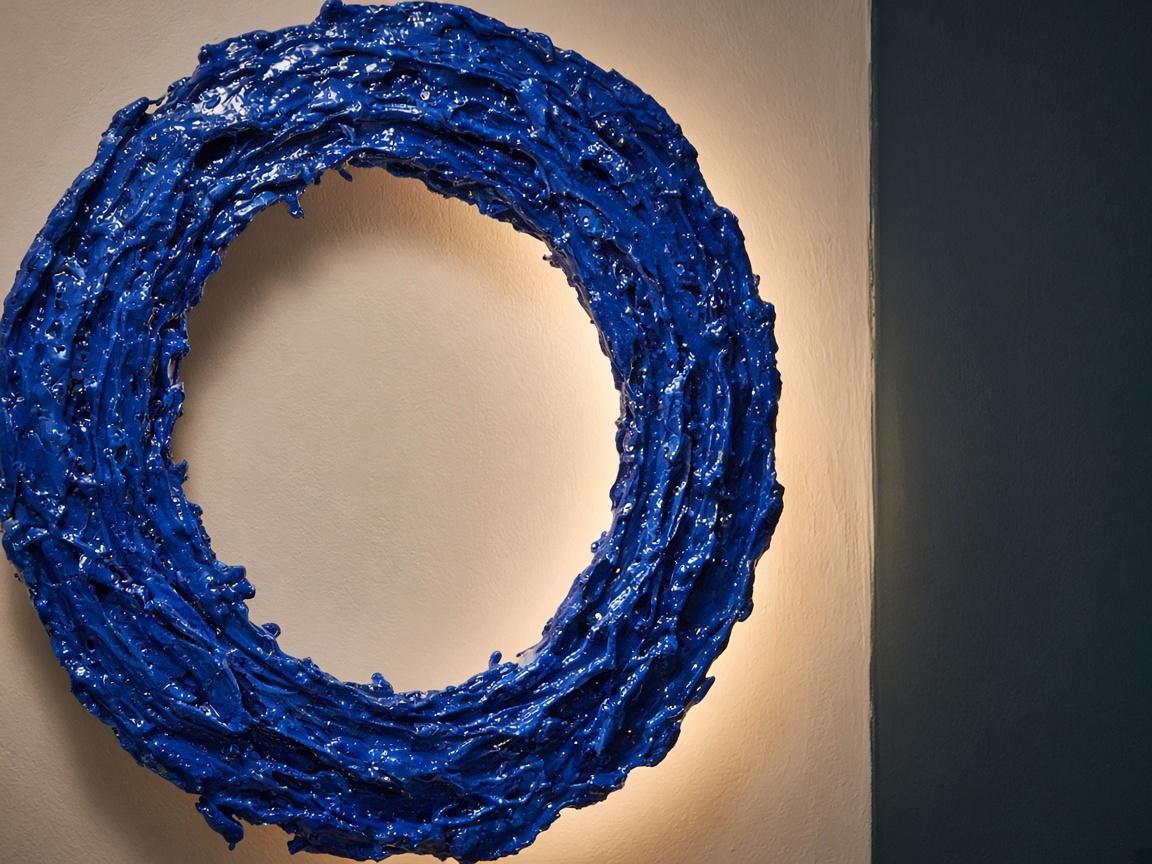
On 27 August 2024 we lit Eclipse for the first time, on the pale wall beside the bench where everyone in the workshop passes a dozen times a day. It is a wall lamp built around a single hand-worked disc, and it keeps its source behind that disc so the light can only leave at the rim. By the end of the afternoon, the room had slowed down enough to stand and look at it.
The form
Eclipse sits a few centimetres off the plaster. The glow comes out as a thin ring first, then spreads into a soft halo that warms the whole wall around it, while the disc itself stays dark against its own light. That is the effect we went after: a circle the eye reads as full and empty at once, shifting with the hour and with however much dimming you ask of it. In a corridor it behaves like a small moon. Beside a chair it behaves like reading light that never points at you.
Making the edge
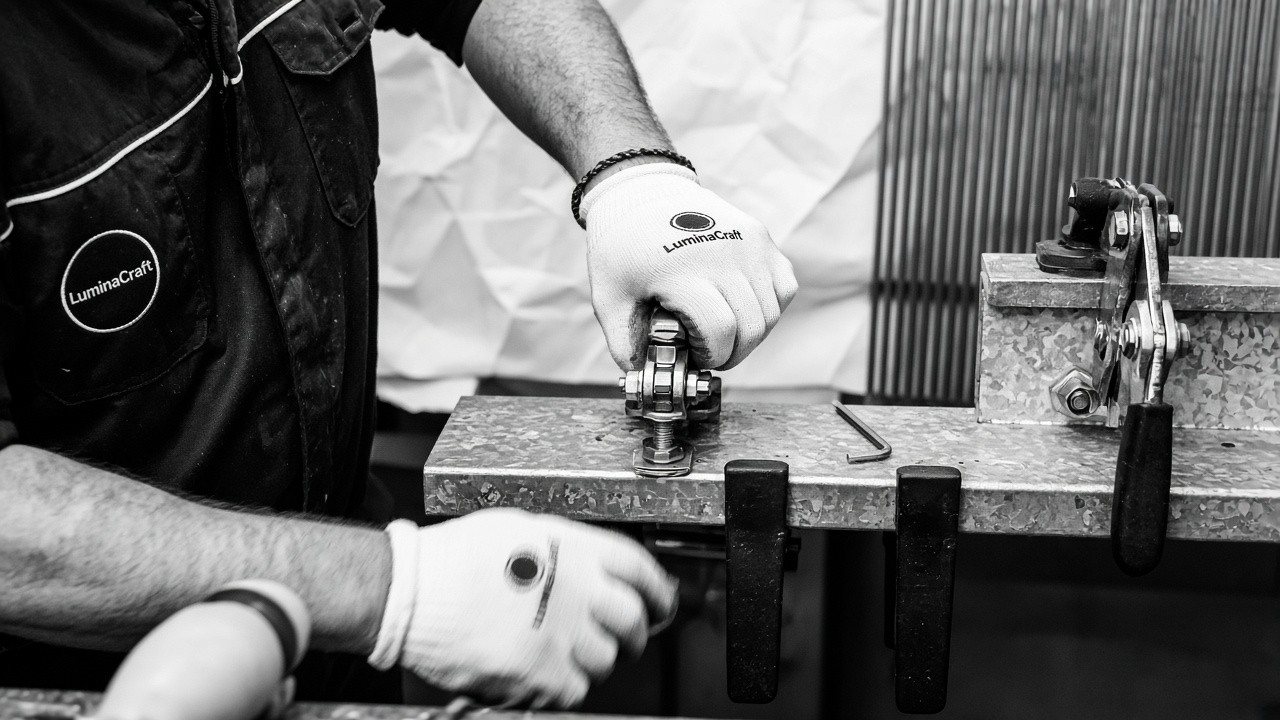
The disc is cut, then beaten back from the rim by hand until the metal thins and takes a low, even sheen. Nothing here is polished to a mirror, because a mirror would throw the source straight back into the room. The last stage is the least glamorous and the one that decides everything: our bench mates stand at arm's length, tilt the shade by a fraction, step back, tilt again. A millimetre at the rim is the difference between a ring and a smudge.
- A hand-finished disc in darkened brass or pale matte nickel.
- A concealed source, so the eye never meets the lamp directly.
- A shallow bracket that holds the piece close to the wall.
- Dimming that takes the halo from full down to a faint ring.
"We kept taking material away until the light had somewhere to go."
— from our workshop, August 2024
Since that first evening, Eclipse has gone up in a hallway, in a reading corner, and in the stairwell of a house whose owners asked us not to name it. The question people ask is how large the disc is; once the lamp is switched on they tend to forget the question. Light, held at the edge.