Ghent
Wireform
Light Stick
PostCrissi
Stella Moon
architecture and interiors by the design team
photography by LuminaCraft
Private homes, Ghent
Two private homes in Ghent, finished in 2024, standing close together on a narrow street. Both are tall and thin, the way the city builds, with windows at the front and the back and nothing in between. Daylight reaches the middle of the plan for an hour, then leaves it. Our brief began in that middle — the halls, the stair, the rooms with no wall to borrow light from.
What the light does here
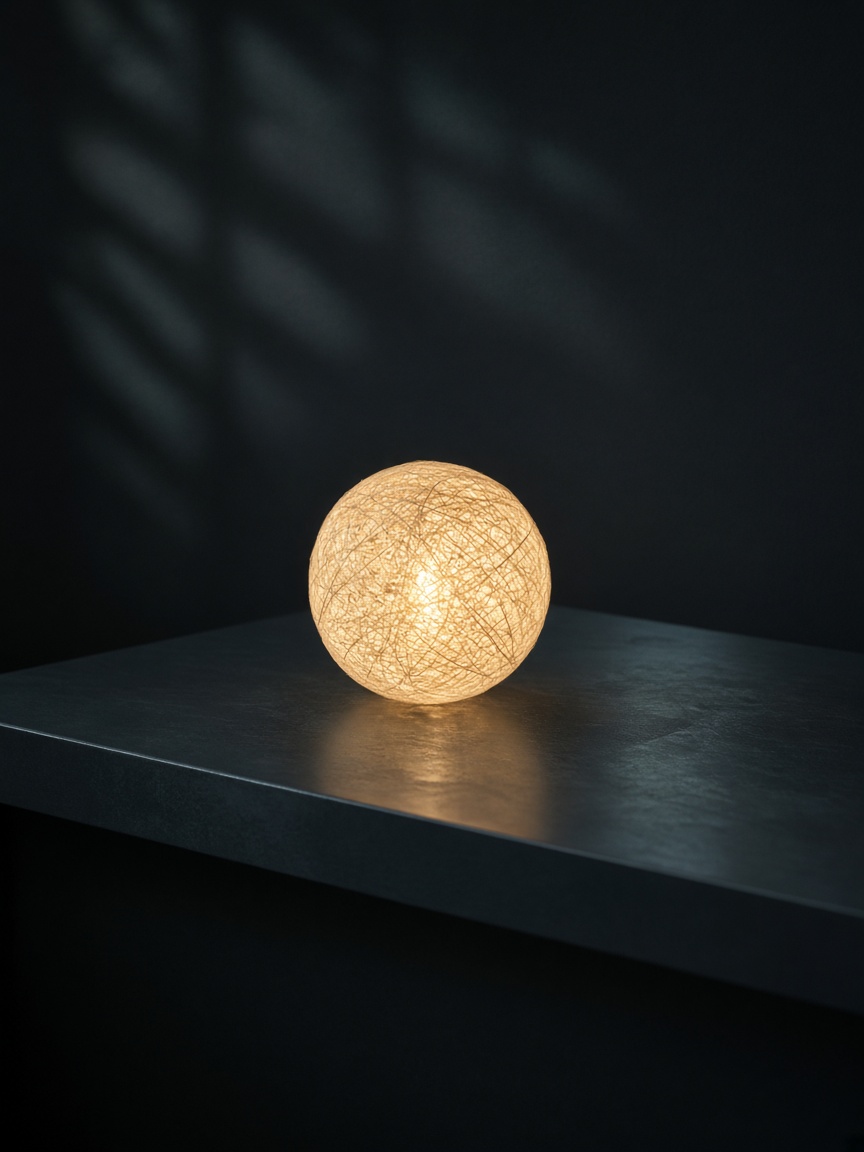
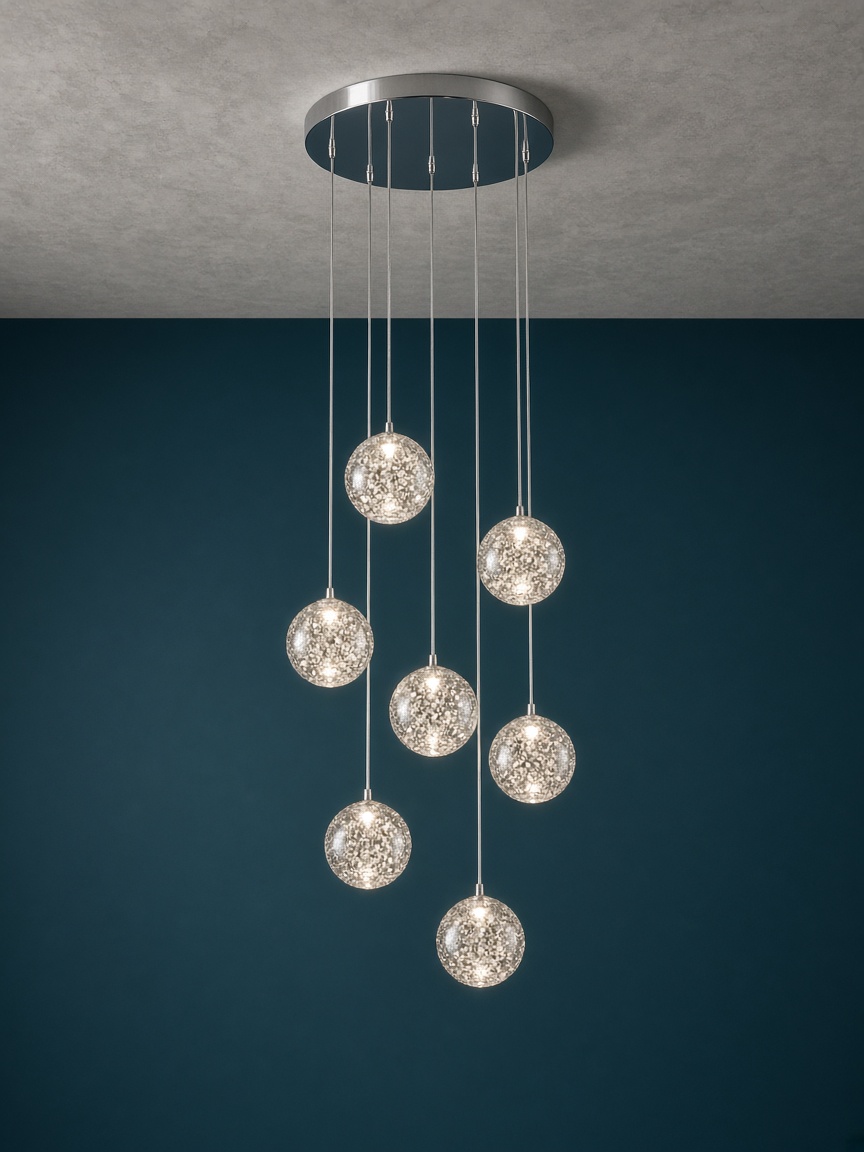
We started with Wireform. Sunray spheres of hand-woven aluminium sit low on tables and sideboards, holding their glow inside the weave so the light stays at eye level instead of washing the ceiling. Down the entrance hall a Sunray Chandelier drops through the full height of the stair void: seen from below it is a slow cluster of small suns, and it pulls the eye up through all four floors. At the far end of the hall, on its rough iron base, a Wanderer keeps a darker, more sculptural note — light you have to find.
The corridors took Light Stick. Slender rods set close to the walls and ceilings give one clean line of warm direct light each, enough to walk by and nothing to look at. They keep the passages calm, which lets the rooms carry the character. In the bedrooms PostCrissi does the opposite: hand-pleated fibreglass shades fold the beam into soft ribs of shadow, and the light that comes back off the wall is diffuse and close, the kind you read under.
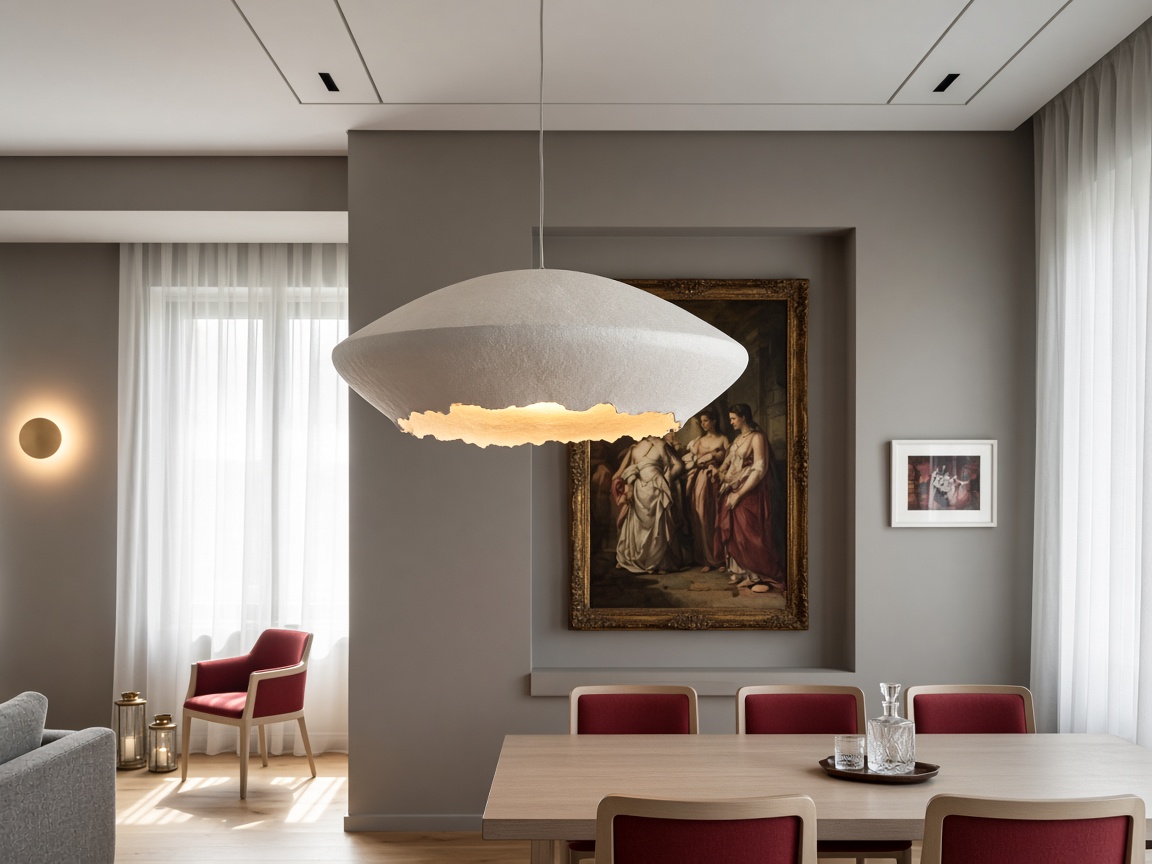
Stella Moon sits in the two rooms where the ceiling had to disappear — leaf-lined aluminium hemispheres that hide their source, so only a wash of reflected light arrives, copper in the dining room and silver in the study upstairs. Two houses, one language of forms, and nothing in them that announces itself. The rooms simply stay lit long after the daylight gives up. That is usually enough.