Craft
LuminaCraft: the hands behind the light
Before the machines in the workshop wake, there is a quarter of an hour that belongs to the hands. A bench is wiped down. A pair of calipers is set beside a sheet of copper, and someone runs a thumb along its edge looking for the burr the shears left overnight. Nothing has been produced yet. Something has already begun.
What the hands remember
Copper is soft, and soft things keep a record. Press too hard with the planishing hammer and the dent stays; press evenly and the surface fills with small bright facets that will take a bulb and scatter it across a ceiling. Our metalworkers learn this in their wrists years before they can explain it, and they know a brass ring is warm enough to bend by the weight of it in the palm. Glass is less forgiving. It asks for a steady rotation and a decision made in advance, because once it has been blown there is no argument left to have, so we still count those seconds by hand: a mouth and two palms, turning a sphere until it is round. Out of that long conversation between a person and a material come four operations we have never given to a machine.
- Beating the discs: hundreds of light hammer blows per lamp, none of them landing twice in the same place.
- Brushing the metal to a soft directional grain, working with the light as it falls.
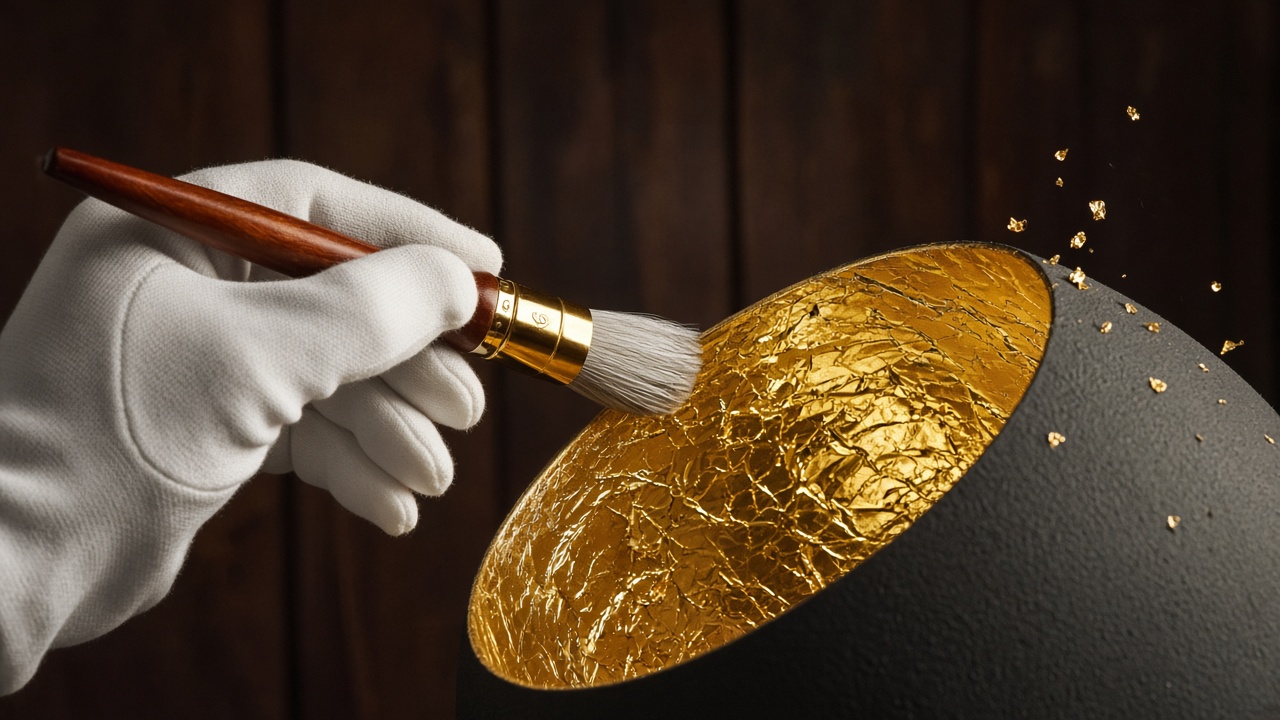
- Painting the inner surfaces in thin layers, until the finished lamp seems to hold a colour that came from inside it.
- Assembling, wiring and switching every piece on before it is wrapped. The last pair of hands to touch a lamp is the one that sees it lit.
Why the mark stays
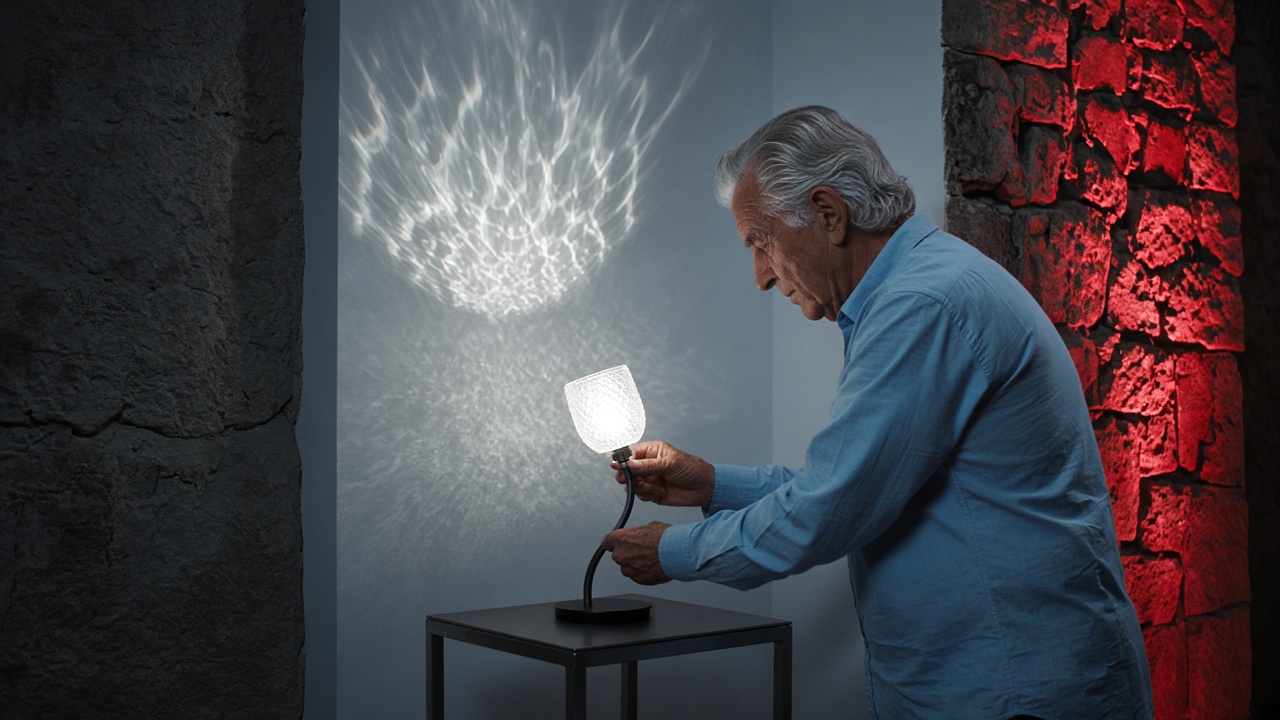
It would be quicker to remove the evidence. An even lacquer, a symmetrical rim, a surface with no history in it: all achievable, all cheaper. We have worked the other way since our founding, for one reason, and the reason is light. Light behaves differently on a surface a person has touched. A beaten facet throws a shadow a millimetre wide. A brushed grain pulls the glow into a single line. A painted layer, laid unevenly on purpose, lets some of the metal’s own warmth through at the edges. That is where the essence of a LuminaCraft lamp lives: in the small errors that make the light look alive, in a form the hand arrived at before the drawing did.
So when one of our pieces reaches a room and the shadow on the wall is slightly lopsided, slightly warm, slightly uneven, that is the hand that made it. Still there. Still moving.