
Craft
Aureole: a sculpture-like ring lamp, beaten, brushed and painted by hand
A ring begins as a flat strip
The Aureole starts on the bench as a strip of brass, cut to length, rolled until the two ends meet and closed into a circle you can lift with one hand. What follows takes three of us and most of a week. We have kept the order of the steps almost unchanged since our founding, because each one decides something the next cannot undo.
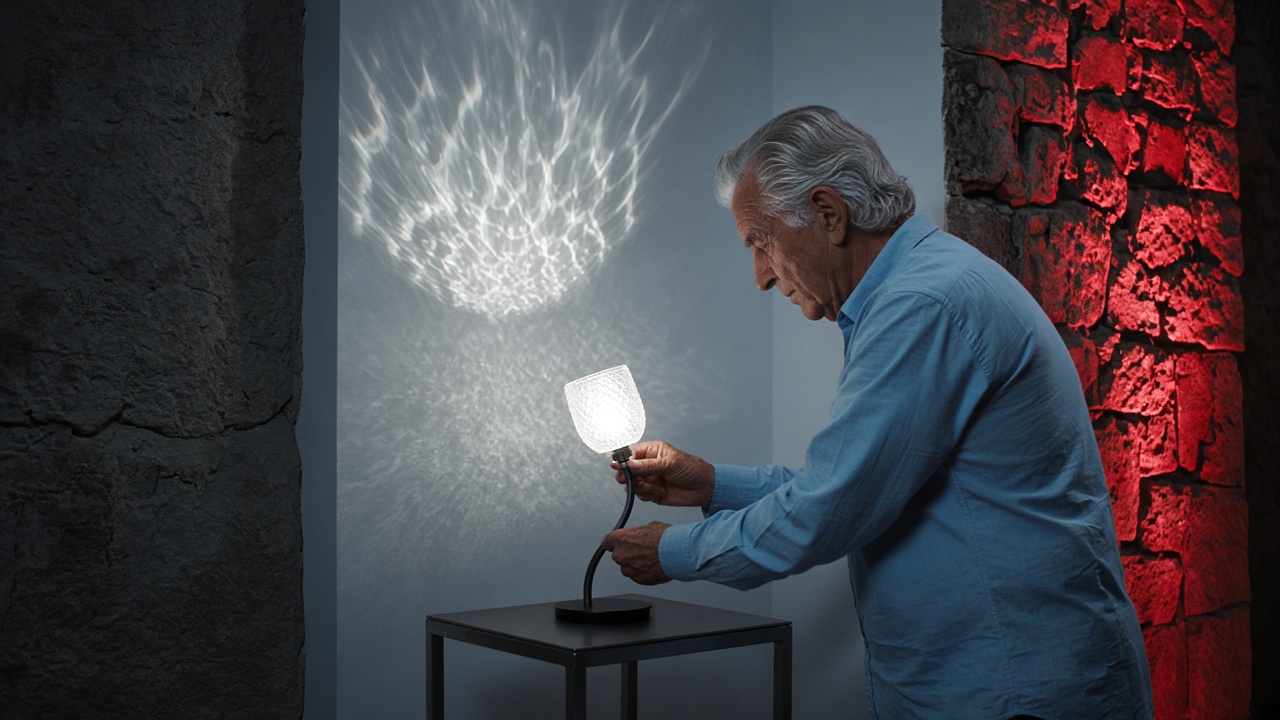
The first pair of hands works with a mallet and a steel stake. The ring turns a few degrees after every strike, so the blows travel around it in a spiral instead of a line and the wall thins evenly as it goes. Brass keeps a memory of the hammer long after the surface has been calmed down. That memory is what the light reads later: hundreds of small facets, each angled a little differently, each returning the lamp's own glow at its own pace.
Then comes the brushing, taken across the grain with a stiff wheel until the facets soften and the high points begin to shine. After that, the painting. Thin coats, laid on by hand, with the ring lit between coats so we can judge what the finish is doing to the light and not only to the colour. Two of us hold every finished lamp against a dark wall before it leaves the bench. Most go back for one more coat.
- Beating — two days, one mallet, some nine hundred strikes around a single ring.
- Brushing — half a day, until the surface reads as satin under a bare bulb.
- Painting — three thin coats, lit and inspected between each.
The form is finished when the light stops showing us the tool and starts showing us the metal.
Why we still do it by hand
A machine could hand us a perfect circle in an afternoon, and it would come back with nothing inside it: even, quiet, forgotten a week after hanging. Our rings carry the small irregularities of a hand at work, and those irregularities are the reason the Aureole behaves differently in every room it enters. The circle is only the armature. What stays in the room is the record of the hand that made it.